



Author: [Add author name and credentials] | Last updated: October 2026
Beach writing is any writing that uses a beach as its setting, subject, or mood, from a short description to a full story. The best way to start beach writing is to pick one purpose, collect specific sensory details, and shape them into a scene that puts the reader on the sand. This guide covers the full topic, with examples, techniques, and prompts you can use today.
Whether you are a student, a teacher, or a writer who wants a stronger seaside scene, you will learn how to plan, describe, and revise. You will also see how writing about the beach changes across essays, stories, and journals.
What Is Beach Writing?
Beach writing covers any text built around the shoreline and the experiences that happen there. It can be factual, personal, or imaginative. A school essay about a family trip counts. So does a poem about the tide, a journal entry written on the sand, or a novel scene set on a stormy coast.
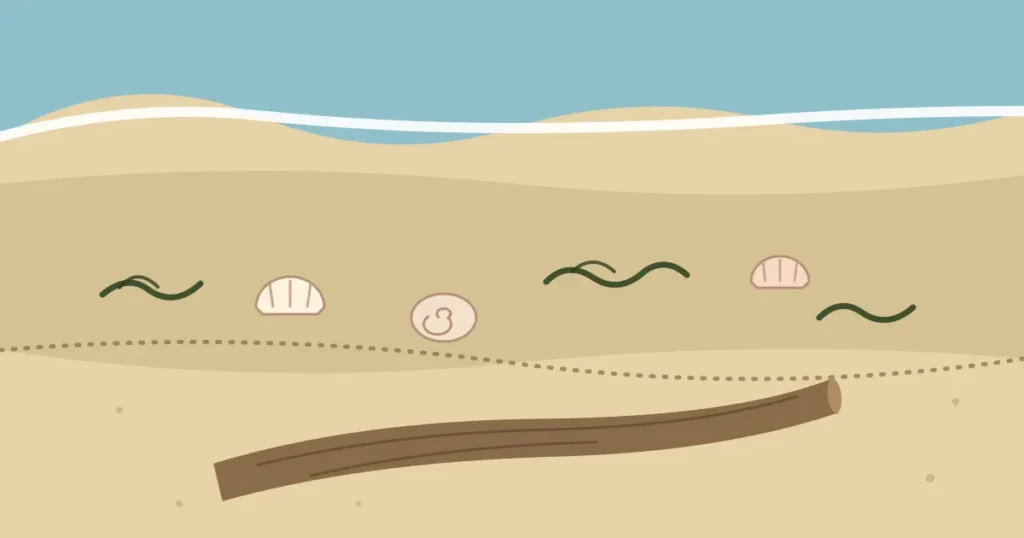
The setting connects all of these. A beach gives writers a familiar place full of sights, sounds, smells, and textures. Readers recognize it quickly, so you can spend your words on feeling instead of explanation.
Types of Beach Writing
Different goals call for different forms. This table compares the most common ones.
| Type | Main goal | Best for | Key focus |
|---|---|---|---|
| Descriptive | Paint a picture | School tasks, scene setting | Sensory detail |
| Narrative | Tell what happened | Stories, memoirs | Plot and emotion |
| Essay | Explain or reflect | Students, exams | Structure and thesis |
| Journal or poetry | Capture a moment | Personal expression | Voice and imagery |
Pick one type before you start. Mixing them without a plan makes a piece feel scattered.
Why Writing About the Beach Works So Well
Writing about the beach works because the setting is full of contrast. It is calm and wild, crowded and lonely, joyful and reflective, sometimes in the same hour. That contrast gives beach writing mood and conflict without extra effort.
Three reasons stand out:
- The beach appeals to all five senses at once.
- Most readers have a seaside memory, so they connect fast.
- Tides, light, and weather create natural mood shifts.
These strengths carry a risk. Because beaches feel familiar, writers reach for clichés such as golden sand and endless blue water. Strong writing about beach life finds the detail other writers miss.
How to Start Beach Writing: Plan Before You Write
A short plan saves time and improves focus. Answer three questions before you write the first sentence.
Choose Your Purpose and Audience
Decide what the piece must do. Should it describe, tell a story, or make a point? An exam answer needs a different shape from a travel blog post. Name your reader too. A teacher, a classmate, and a blog audience each expect something different.
Pick a Point of View
First person works well for memories and journals. The word “I” brings the reader close to the sand and salt. Third person suits stories where you follow a character and show their thoughts from outside. Stick with one choice from start to finish.
Set One Mood
Choose a single dominant mood, such as peaceful, lonely, joyful, or tense. Every detail should support it. A peaceful scene uses soft sounds and slow movement. A tense scene uses sharp light, rising wind, and fast waves.
How to Describe a Beach in Writing
Describing a beach well means choosing a few precise details, not listing everything you see. For a full walkthrough, read our guide on how to describe a beach in writing. The core ideas are below.
Use the Five Senses
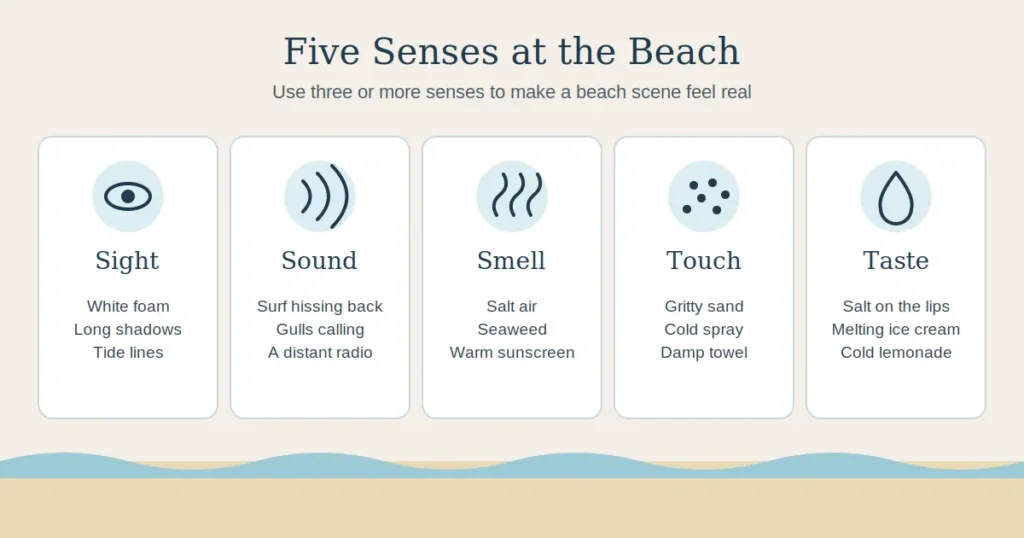
Sight is the obvious start, but sound, smell, touch, and taste make a scene feel real.
- Sight: tide lines, driftwood, long shadows, white foam
- Sound: surf hissing back, gulls calling, a distant radio
- Smell and touch: salt air, warm sunscreen, damp sand, cold spray
Taste is rare but powerful. Salt on the lips or a melting ice cream can anchor a whole scene.
Make Each Beach Specific
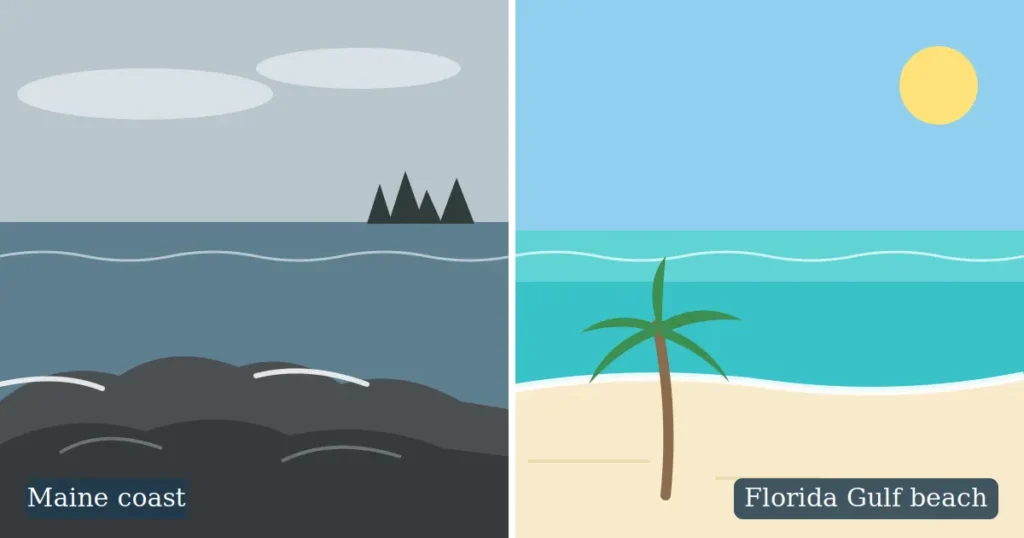
A rocky Maine shore sounds, smells, and feels different from a Florida Gulf beach or a California surf break. Name the kind of sand, the water temperature, and the plants nearby. Specific places feel real, while generic ones blur together.
Show Details Instead of Telling
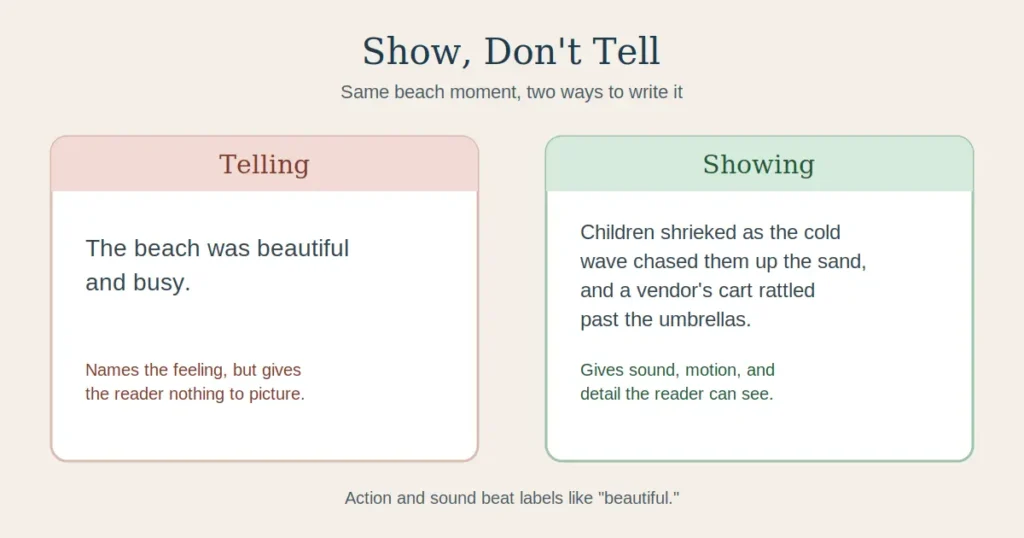
Compare two versions of the same moment.
Telling: The beach was beautiful and busy.
Showing: Children shrieked as the cold wave chased them up the sand, and a vendor’s cart rattled past the umbrellas.
The second version gives the reader pictures, sounds, and action. It never names the feeling, yet the reader feels it.
Use Time of Day and Weather
Light changes everything. Morning brings pale, quiet light and empty sand. Midday brings glare and heat. Sunset adds orange tones and long shadows. Weather works the same way. A storm turns the same shore into a different place.
Beach Descriptive Writing Examples
Examples show the techniques at work. Below are two short original samples. For more, see our collection of beach descriptive writing examples.
Example one, a calm morning:
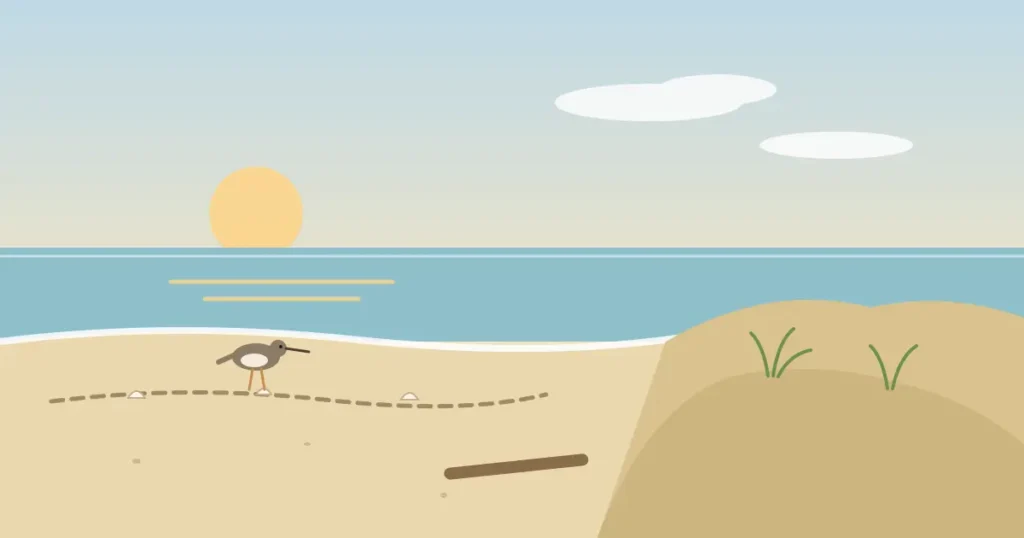
AI prompt: Realistic photo of an empty beach at dawn, a small sandpiper at the water’s edge, grassy dunes in the background, pale gold light, calm sea, no text
“Dawn spread a pale gold over the shoreline. The tide had left a curved line of shells and seaweed, and the sand felt cool and firm underfoot. A sandpiper ran in quick circles at the water’s edge. Somewhere behind the dunes a screen door slammed, and then the world went quiet again.”
Example two, a busy afternoon:
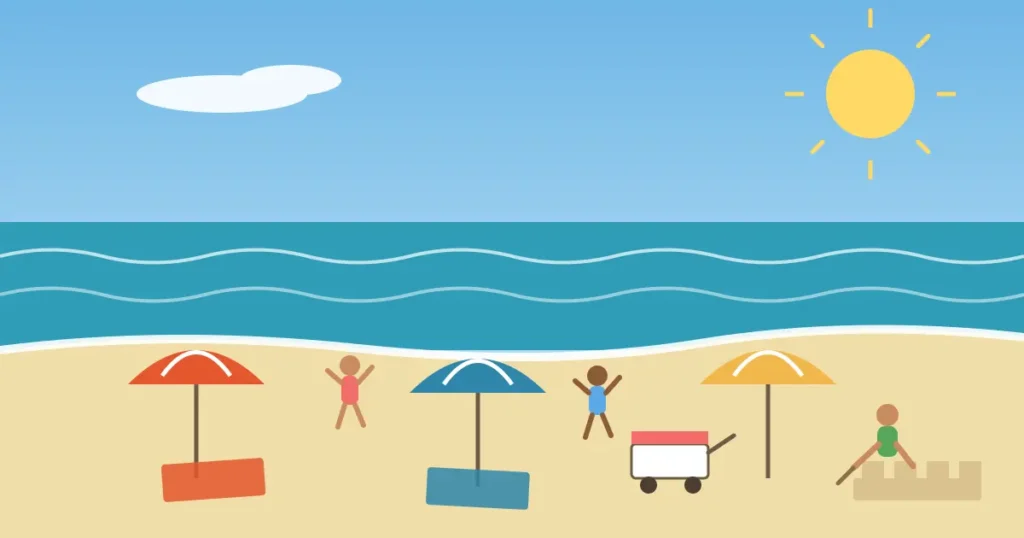
“By two o’clock the beach hummed. Radios competed with shrieking children, and the air smelled of coconut sunscreen and fried dough. Heat rose from the sand in shaky waves. Near the water, a boy dug furiously, building a wall the next wave would erase in seconds.”
Both samples of beach writing use specific nouns, mix several senses, and hold one clear mood. Neither relies on weak words like “nice” or “beautiful.”
Beach Writing Techniques That Improve Any Piece
Good technique turns a plain scene into a memorable one. These methods work for every kind of beach writing, from essays to poems.
Use Figurative Language Carefully
Similes, metaphors, and personification add freshness. A wave can drag pebbles back like a long sigh. One strong comparison beats five weak ones. Skip worn phrases that readers have seen many times.
Choose Strong Verbs and Exact Nouns
Replace general words with precise ones. “Birds” becomes “sandpipers.” “Walked” becomes “trudged” or “strolled.” “Water” becomes “surf,” “tide,” or “spray,” depending on your meaning. Exact words do the work of three adjectives.
Control Pace With Sentence Length
Short sentences create speed and tension. Longer sentences slow the reader down and suit calm scenes. Mix them on purpose. A short sentence after a long one adds emphasis.
Adapt the Beach to Your Genre
The same shoreline serves different forms. Poetry compresses it into a few sharp images and a steady rhythm. Memoir adds reflection on what the place meant. Fiction uses it to create conflict, such as a storm or a lost child. Travel writing adds practical facts, like access, crowds, and the best times to visit.
Beach Words and Phrases to Use
A strong word bank makes drafting faster. Match the words to your mood and avoid repeating the same ones.
| Category | Useful words and phrases |
|---|---|
| Sights | tide line, driftwood, dunes, white foam, seagulls, long shadows |
| Sounds | hissing surf, crashing breakers, gull cries, flapping umbrellas |
| Smells | salt air, seaweed, sunscreen, grilled food |
| Textures | gritty sand, damp towel, cold spray, smooth pebbles |
| Feelings | calm, freedom, nostalgia, restlessness |
Use only a few words from each row. A scene packed with vocabulary reads like a list, not a story.
Beach Writing Ideas and Prompts
Prompts are a popular way into beach writing, and the best ones start from a small, specific scene. Use the three groups below as starting points.
Journal Prompts
- Write about the first minute after you arrive at the shore.
- Describe a beach day that did not go as planned.
- Explain the sound of the sea to someone who has never heard it.
Descriptive Prompts
- Describe the same beach at sunrise and again during a storm.
- Use only touch and smell to describe a boardwalk.
- Write one paragraph about a crowded beach and one about an empty beach.
Story Prompts
- A child finds an unusual object in the tide line. What happens next?
- Two old friends meet on a winter beach after many years.
- A lifeguard notices something strange on the horizon.
For a longer set of ideas and methods, see our guide to beach creative writing.
Writing a Beach Essay or Story
How to Write a Beach Essay
A beach essay needs an introduction with a clear focus, body paragraphs that each cover one idea, and a conclusion that leaves the reader with a thought. Common angles include a family visit, the beach as a place of calm, or the need to keep coastlines clean. Read a visit to the beach essay for a full sample, and browse beach essay titles for catchy ideas.
How to Write a Beach Story
A story needs a character who wants something. The beach is the stage. A child might search for a lost toy, or two old friends might meet after many years. Build a clear beginning, middle, and end, and let setting details serve the plot. For structure and a sample, read our guide to a day at the beach story writing.
In both forms, beach writing improves when every detail has a job. If a detail does not support the mood or the plot, cut it.
Writing About the Beach for Students and Teachers
Teachers often choose beach writing because every student can find something to say about it. Even students who have never visited a shore can imagine the scene and use sensory language. This makes the topic useful for descriptive tasks, personal narratives, and short essays.
Students can follow a simple routine. Plan the mood, list details for each sense, write a draft, then read it aloud and fix weak words. Teachers can ask students to underline every sensory detail and check that at least three senses appear.
Writing at the Beach: Practical Tips

Writing at the beach has its own challenges. Glare, wind, and sand can ruin a session fast. Our guide on writing at the beach covers this in detail, but these basics help:
- Use paper and pencil, since screens wash out in sunlight.
- Sit in shade and protect your notes from wind.
- Collect sensory notes first and draft later at home.
Notes taken on location give beach writing real authenticity. A line you jot down while the surf is still loud often beats one recalled from memory.
Common Mistakes to Avoid
Most weak pieces of beach writing share the same few problems.
- Relying on clichés like golden sand and endless blue sea
- Listing objects without a clear mood or purpose
- Switching point of view or tense in the middle
Another common mistake is telling the reader how to feel. Writing that the beach was “relaxing” does little. Show the slow breathing, the loose shoulders, and the warm sand instead. Also watch for too many adjectives. One exact noun usually beats three vague describing words.
Quick Editing Checklist for Your Draft
Before you finish your beach writing, review the draft with these checks:
- Does the piece have one clear purpose and mood?
- Do at least three senses appear?
- Did you replace clichés with specific details?
Then read the piece aloud. Awkward rhythm and repeated words become easy to hear.
Summary
Beach writing works best when you plan first, choose one mood, and build scenes from specific sensory details. Use the five senses, show instead of tell, and pick strong verbs and exact nouns. Match the form to your goal, whether that is a description, an essay, a story, or a poem. Revise with the checklist, then explore the linked guides to deepen each skill. With practice, your next piece of beach writing will feel vivid and original.
Three Common Questions
How Do You Write About the Beach?
Start by choosing your purpose, point of view, and mood. Then list one detail for each sense. Open with the strongest image, such as the sound of surf or the feel of cool sand, instead of a general line like “The beach is nice.”
What Are Good Beach Writing Prompts for Students?
Good prompts name a small, concrete scene. Examples include the first minute on arrival, a beach day that went wrong, or an object found in the tide line. These give students a clear starting point and room for sensory detail.
How Do You Describe a Beach in Writing?
Choose a few exact details and appeal to several senses. Name the sand, the sound of the surf, the smell of salt, and the light at that time of day. Show the scene through action instead of labels like “beautiful.”
